
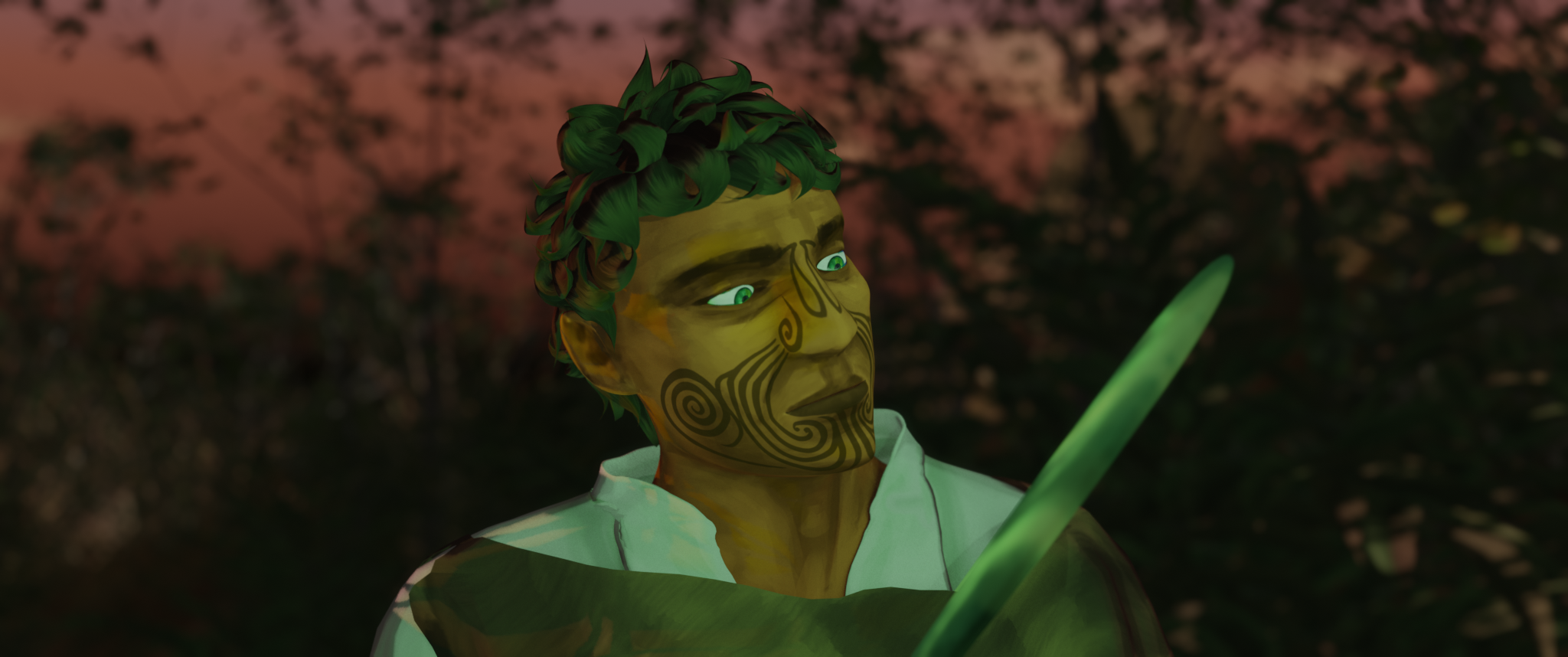
by Lewis Brewer
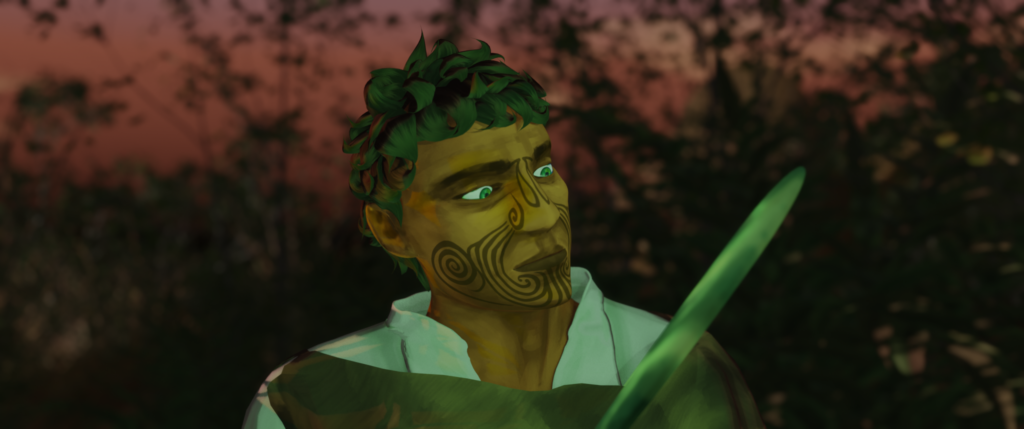
Animation’s engagement with Indigenous stories is often caught in a critical tension between respectful representation and hollow extraction. While some practitioners seek to honour cultural knowledge, many works still reduce living narratives to visual aesthetics, echoing colonial patterns of appropriation (Johnson, 2019).
Here, a major debate emerges between representation and participation. Many animated works engaging with Indigenous content remain situated in representational paradigms, using cultural motifs or historical imagery without sustained community involvement. Such approaches risk extracting knowledge rather than co-creating it. In contrast, Kaupapa Māori (principled) research and participatory ethnography take a different path: long-term engagement where communities are active agents, shaping both process and meaning. This relational approach reframes animation as a process of knowledge exchange, where storytelling evolves through whakawhanaungatanga, the formation of relationships built on respect, reciprocity, and shared purpose (Smith, 2022)
Together, these relationships establish a foundation for understanding animation not as representation alone but as a medium that carries cultural knowledge in embodied form.
There are already several great examples showcasing animation’s unique capacity to share Indigenous stories. Four Faces of the Moon by Amanda Strong or Kapaemahu by Joe Wilson, Hinaleimoana Wong-Kalu and Dean Hamer, demonstrate its potential to embody non-linear time, wairua (shared spirit), and environmental agency. Their works reveal that abstraction, rhythm, and symbolism can visualise intangible cultural heritage in ways aligned with Indigenous worldviews. However, many animation depictions lean towards representational rather than relational storytelling. Disney’s Pocahontas is a classic example of this phenomenon. The film claimed to celebrate Indigenous history but flattened a complex colonial encounter into a simplistic, Western romantic fable. Rather than engaging with living Algonquin or Powhatan communities to understand their epistemologies or oral histories, the film projects Eurocentric values of love, peace, and individualism onto its subjects (Johnson, 2019).
There is little published guidance (a set of best-practice guidelines) that traces how Indigenous ethics and tikanga (protocols) are embedded throughout the entire animation pipeline, from early concept and consultation through iterative design, motion, sound, and review. Case studies often prioritise final artefacts over the relational processes through which they are produced. Documentation of concrete, repeatable workflows for culturally accountable animation remains scarce, particularly for projects developed in partnership with Indigenous communities.
These gaps highlight an urgent need for a more integrated approach to culturally grounded animation practice. Methodologically, there remains little guidance on how kaupapa Māori can be operationalised through the full production process, from conceptualisation to consultation and refinement. Epistemologically, animation is still too often treated as a representational medium rather than a relational one, where knowledge is constituted through ongoing connections rather than fixed outputs. Theoretically, the discipline has yet to reconcile Indigenous methodologies, autoethnography, and sensory ethnography within a cohesive framework that accounts for practitioner transformation and ethical accountability. Addressing these absences requires each animator to develop their own framework of engagement.
From experience of consulting with my own Māori community, and building the capability to make a short animation about the stories of my ancestors, I would suggest a useful framework for animators and gamemakers.
A Relational Framework for Culturally Accountable Animation
The methodological framework that guided Te Hīkoi can be understood as a seven-step relational process, a pathway that moves from gaining foundational knowledge to producing culturally accountable creative outcomes. Each stage builds upon the last, forming a cyclical practice grounded in kaupapa Māori ethics, autoethnography, and visual ethnography.
Gain a Base Level of Knowledge
Before entering any community, a practitioner undertakes independent learning. This stage asks for humility and patience: you research to prepare, not to extract. As Linda Tuhiwai Smith (2022) reminds us, relational research begins with respect. For my own project, developing a foundational understanding of protocols, language and historical context of Māori community gave me a foot in the door. This base knowledge demonstrated sincere commitment and ensured that when opportunities arose to meet with cultural experts, I was ready to engage in meaningful, reciprocal dialogue rather than surface-level inquiry. This is also the base level of understanding a practitioner should have when looking to relate shared knowledge, to ensure that they depict the details accurately.
Start the Conversations with Authorities
With groundwork established, the next step involves whakawhanaungatanga, forming relationships with those who carry the culture. These meetings are not transactional consultations but enduring partnerships rooted in trust and mutual learning, echoing Cram’s (1993) emphasis on manaakitanga within Māori research ethics. Each conversation deepens both understanding and accountability. By leaning on a wide network of advisors, historians, artists, and kaumātua (elders), we build a relational foundation strong enough to support creative exploration.
Get to the Heart of the Story
Relational engagement guides me toward the story I am meant to tell. Originally for Te Hīkoi , I planned a conventional retelling of the Battle of Ōhaeawai, but through kōrero/talking I encountered the story of Te Mere Whakakopa, a sacred greenstone club defiled with human excrement to provoke war. This narrative carries the emotional truth of the era far more powerfully than military accounts. It shifts the project’s purpose from recounting events to exploring the cultural, spiritual and ethical tensions driving them. This pivot illustrates how Indigenous ways of knowing and being can transform storytelling by aligning narrative focus with cultural intent rather than chronology.
Find Your Cultural Touchstones
Once the story’s centre is clear, seek to understand the cultural knowledge underpinning it. In Te Hīkoi , the desecration of the weapon represents a grave breach of tapu, an assault on mana itself. Comprehending these principles, how mana connects prestige, land, and ancestry, and how tapu regulates balance, was essential to capturing the act’s weight. I recognised that every gesture within the animation needed to honour these cosmological frameworks, ensuring the depiction resonated with Ngāpuhi worldviews rather than external interpretation.
Align the Lenses
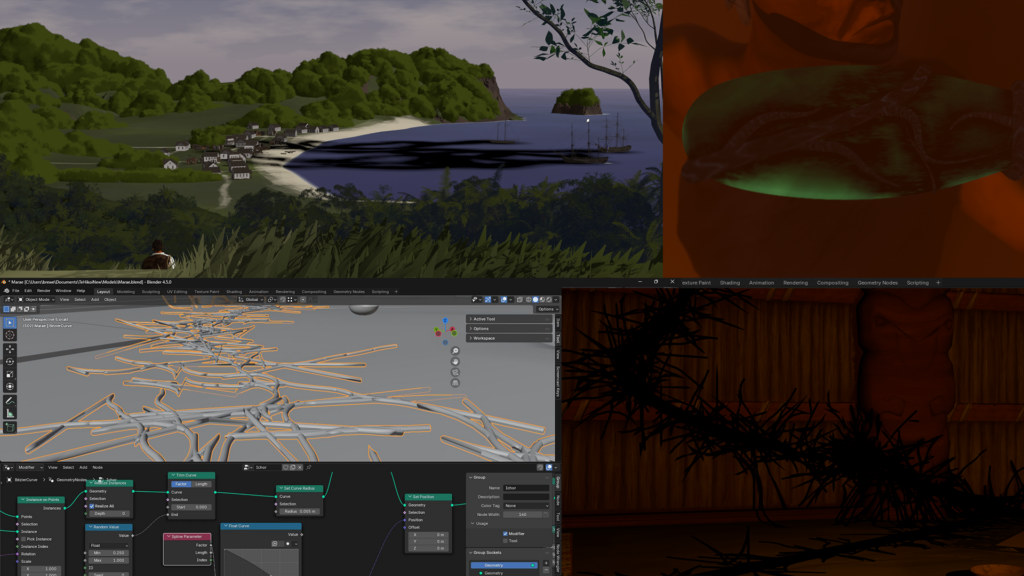
The next step is to identify the emotional frequencies conveyed by these touchstones (sacredness, disgust, anger, sorrow) and determine metaphors to channel them visually. In Māori oral tradition, metaphor is a vessel for truth; actions ripple through nature and spirit alike. I developed the motif of black ichor seeping across whenua/land and taonga/treasures, a phenomenological expression of imbalance. This image translates spiritual violation into sensory experience, aligning the audience’s perception with Māori ontological understanding.
Animate
With metaphors established, animation becomes the means to embody emotion through motion. Following Tom Gunning’s (2014) idea of “animating the instant,” I choreographed the ichor’s spread as a slow, inevitable tide, mirroring the creeping impact of colonial transgression. Here, form and meaning merge: abstraction, rhythm, and atmosphere carry narrative weight. Animation’s capacity to portray vivid emotions is key here to weave history, spirituality, and feeling into a cohesive visual language.
Consult Your Relationships
The process concludes where it began, with relationships. Each major iteration of Te Hīkoi was brought back to cultural partners for reflection. Feedback was treated not as endorsement but as a continuing conversation, ensuring alignment with tikanga/protocol and shared intent. This iterative loop aligns with Sturm’s (2023) “Indigenous ethics of visual research,” where creative output remains a living dialogue.
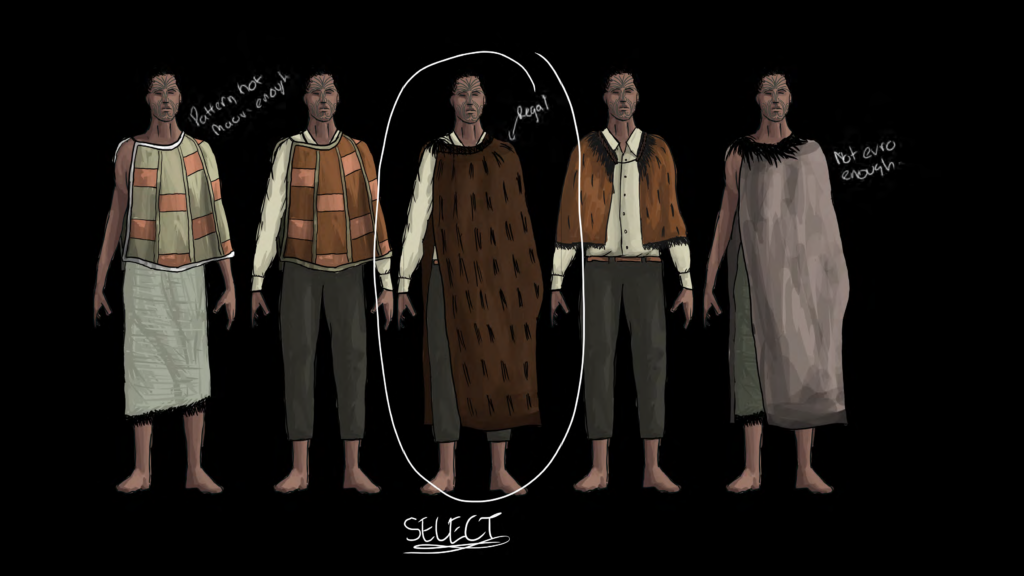
Going to “The Source of Our Spirit”, is what I believe a shift from representation to relationality can give in our field of gaming and animation. While it does take time to build these relationships, if you approach them with compassion and patience, I have no doubt they will flourish. Te Hīkoi stands as an animated film that embodies Māori culture in its forms, rhythm, and symbolism. The framework behind it offers a replicable model for culturally accountable animation practice. Together, they propose a paradigm shift in how animation can engage with Indigenous knowledge systems.
For the animation industry, this approach challenges existing norms of consultation and production by showing that deep collaboration and slow processes can yield greater cultural integrity and creative depth. For education, it suggests the need to integrate ethics and epistemology alongside technical skills, encouraging emerging practitioners to treat animation as a process of relationship building. For cross-cultural storytelling, it offers a way to find the universal emotions that underpin stories and create understanding.
Thank you.
Lewis Brewer (Ngāpuhi ki Whaingaroa, Māori) recently completed his Master’s Degree (RMIT-Melbourne) in Animation, Games and Interactivity (MAGI). This article is a short summary of his final dissertation, which won the 2025 Ethical Leadership Award. He talks of his path to learning and making animation, through Indigenous principles, in making his own animated short Te Hīkoi. https://www.lewisbrewer.com/hikoi/
Four Faces of the Moon (2016) CBC, accessed 15 October 2025. https://www.youtube.com/watch?v=rWe–sysNkk
Kapaemahu (2020) Kanaka Pakipika, accessed 15 October 2025. https://vimeo.com/360633624/7929768d87
Cram F (1993) Ethics in Māori Research: Working Paper LW Nikora (ed.), Cultural justice and ethics: Proceedings of a symposium held at the Annual Conference of the New Zealand Psychological Society, pp. 28–30
Johnson B (2019) Neocolonialism in Disney’s Renaissance: Analyzing Portrayals of Race and Gender in Pocahontas, The Hunchback of Notre Dame, and Atlantis: The Lost Empire, accessed 15 October 2025. https://ir.library.oregonstate.edu/downloads/xp68kn49b
Gunning T (2014) Animating the Instant: The Secret Symmetry between Animation and Photography, in K Beckman (ed.), Animating Film Theory, Duke University Press, p. 0, accessed 15 October 2025. https://doi.org/10.1215/9780822376811-003
Smith LT (2022) Decolonizing methodologies: research and Indigenous peoples, Third edition, Bloomsbury Academic, London New York Oxford New Delhi Sydney
Sturm S (2023) An Indigenous Ethics of Visual Research, Knowledge Cultures, vol. 11, no. 3, pp. 39–59