
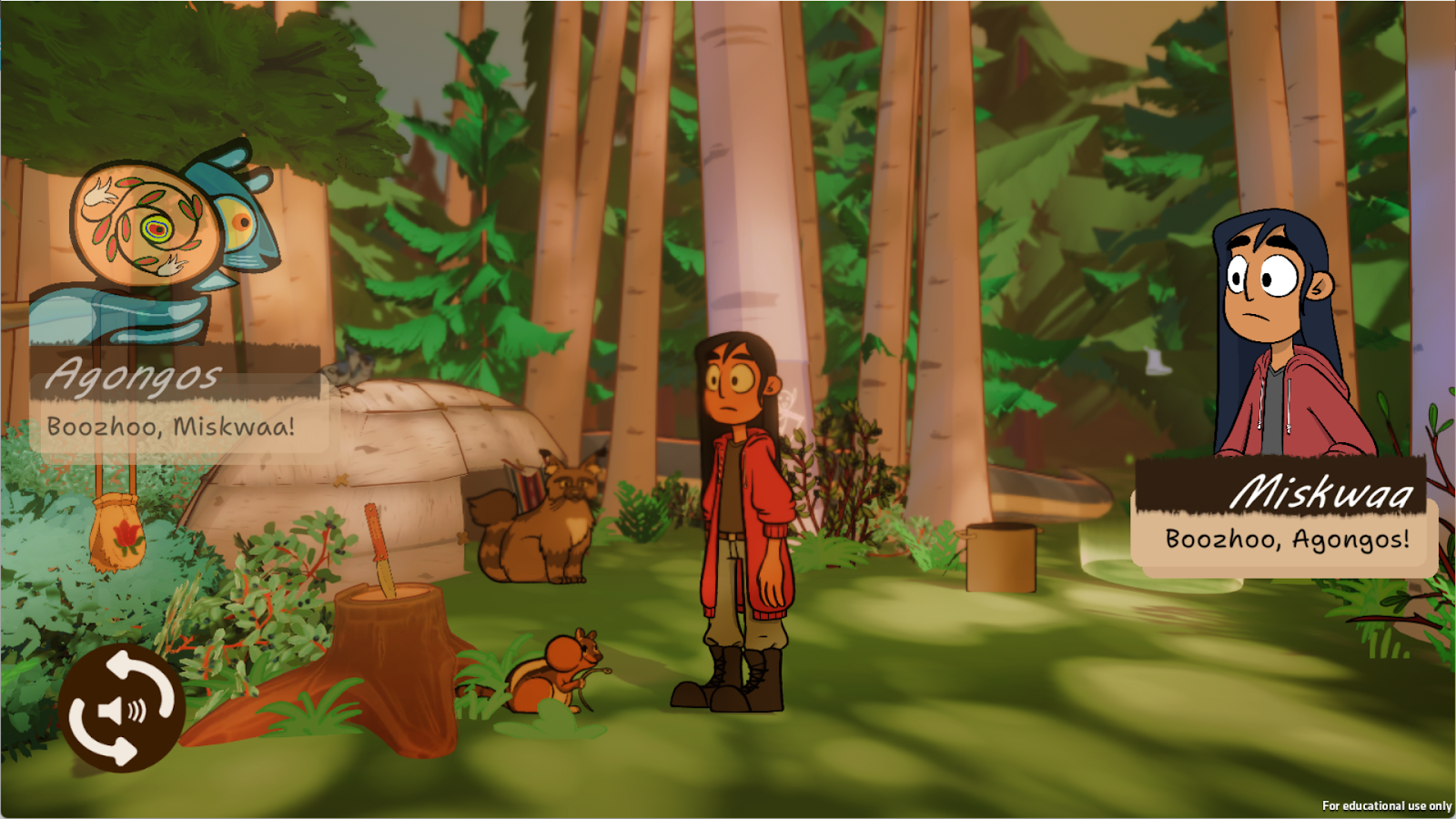
By Eleanor Mithun and the Reclaim! Development Team
Boozhoo Nindenewemaaganidog!
We are excited to announce a game which puts Whiteness on the side lines and offers a Indigenous perspective throughout—where relationality is primary, and speaking Ojibwemowin to all is the norm.
Many gamers already make choices to play games in a language outside of their own. For example, Western fans of titles like Yakuza and Persona often choose to play with a Japanese voice track (with subtitles) as a way to further immerse themselves in the setting and culture of the characters. France’s Clair Obscur: Expedition 33 had some players listening to culturally French characters in French.
However, with few exceptions, we are often presented with our own language (read: English) as the default one to play in. Choosing to listen to Japanese as an American gamer at the least requires you to get into the menus and change some options. The choice is made for the player by the developer or publisher’s localization and marketing teams.

Reclaim! Azhe-giiwewining (“returning home”) goes one step deeper. As developers, how can we use this need to choose what language the game boots in to support our vision? What if we created a game that treats Indigenous language as default? After all, Indigenous languages were the “default” pre-colonialism.
In Reclaim, players take on the role of Miskwaa, an Ojibwe teen who finds herself in-between identities. Urban and rural. Modern and traditional. A speaker of English and Ojibwe. Reclaim pointedly places Miskwaa with choice at the center of her character, except in one way: she must speak Ojibwe. This is the only way she can interact with the world, and, as far as voice tracks go, it is the only way our players can interact with the game.
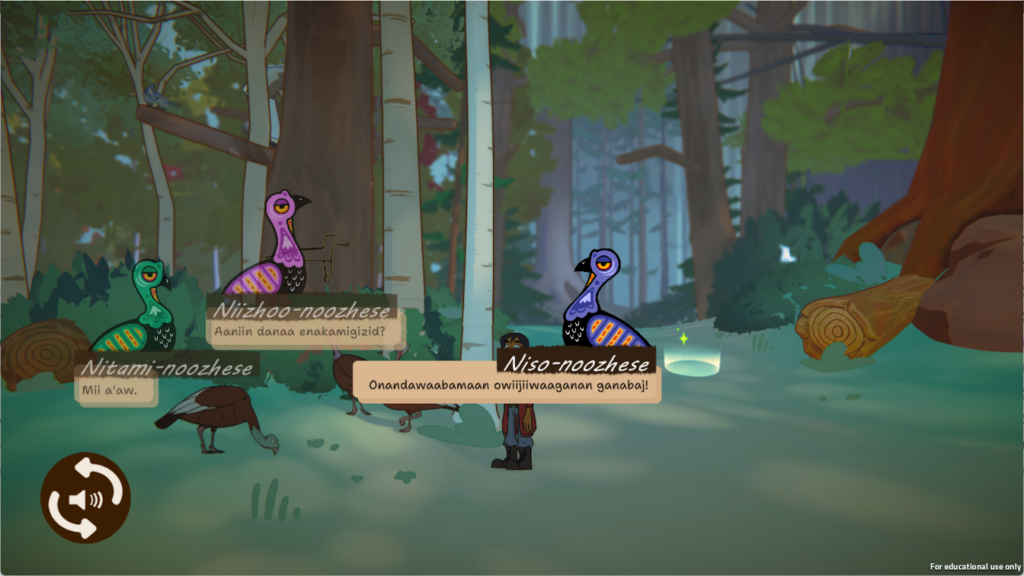
By removing the English safety net, Reclaim asks players to sit with the beauty and rhythm of a language that has survived against all odds. It moves language beyond a menu toggle and places the burden of adaptation on the player rather than the culture being portrayed.
The development of Reclaim has created a space where Ojibwemowin isn’t a novelty; it is the primary way characters interact with each other. The goal of this game hasn’t necessarily been to create an educational tool. Rather, Reclaim provides players with an immersive experience with the language. Its setting, story, and characters are rooted in Anishinaabe experience and were developed by indigenous creators and in consultation with tribal workshops and elders.
Ojibwemowin is centered as the heartbeat of Reclaim. By doing so, it performs an act of sovereignty. Its existence challenges a cultural and games industry standard that indigenous languages are historical artifacts or optional flavor text. With players forced to navigate Miskwaa’s world through Ojibwemowin, they are participating in the vital, ongoing work of decolonizing the world of games.
Azhe-giiwewining is not just a subtitle; it is a homecoming for a language that never truly left.

Reclaim will be available on PC and Mac beginning on March 26th, 2026. You can find out more on Steam or itch.io.